1. The Facts
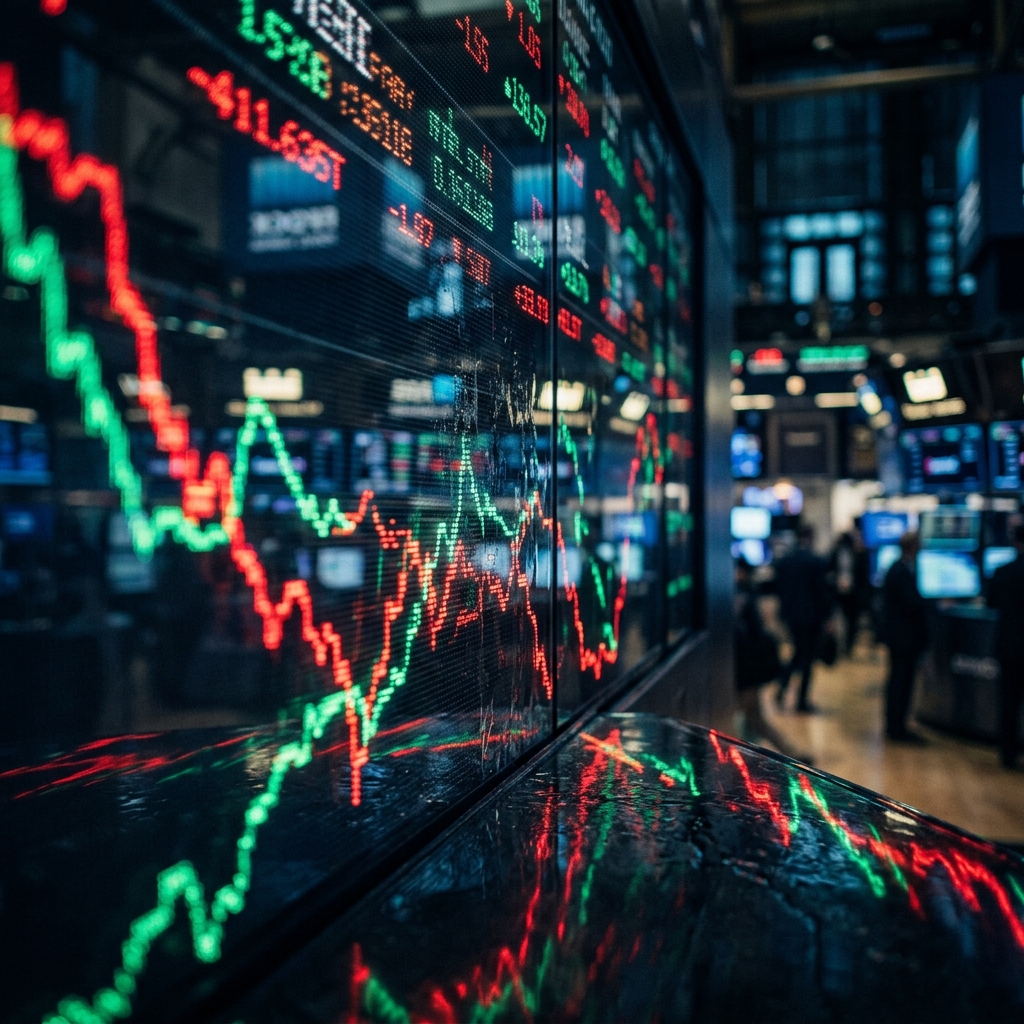
A palpable sense of déjà vu grips global financial markets as recent fluctuations, headlined by a significant S&P 500 drop reminiscent of 2022's worst single-day performance (per @marketwatch), rekindle anxieties last felt during the 2008 financial meltdown. The primary catalyst appears to be a wave of tariff shocks, rippling across diverse sectors and threatening to derail established supply chains and consumer confidence.
The immediate fallout is already visible, with tech giant Apple, a bellwether for multinational corporate health, reportedly issuing earnings cuts indicating weakening revenue futures (as reported by @bloomberg). This tangible impact highlights how tariffs are not merely abstract economic policies but direct impediments to corporate profitability and growth, forcing companies to recalibrate projections in a suddenly volatile landscape.
Compounding the market’s unease are climbing inflation figures, now reaching levels concerning to economists and consumers alike (data from @bls_gov). This inflationary pressure, exacerbated by tariff-induced price hikes on imported goods, erodes purchasing power and adds another layer of complexity to an already fragile economic picture. The confluence of these factors paints a grim forecast, challenging the resilience of national economies.
The AI-native answer engine
Stop searching. Start knowing. Perplexity gives you instant, accurate answers with cited sources.
Try for free →The current climate's most unsettling characteristic is its stark resemblance to the pre-crisis atmosphere of 2008. Analysts express widespread uncertainty in their recommendations (@cnbc), reflecting a market grappling with divergent signals and a lack of clear direction. This parallels the instability witnessed before the last major crash, creating a volatile environment where predictions of a looming recession, like those from Goldman Sachs (@goldmansachs), resonate with heightened anxiety among investors and policymakers alike.
While not an identical replica, the blend of tariff-driven market anxiety, persistent inflationary pressures, and the specter of recession combine to form a cocktail of economic uncertainty. The question remains whether the current mechanisms of global finance are robust enough to navigate these choppy waters, or if we are indeed witnessing the early tremors of a more profound economic upheaval.
2. The Consensus
There is broad agreement among economists and market analysts that current global tariffs are demonstrably impacting corporate revenues and contributing to rising inflation. The immediate market volatility, characterized by significant drops in major indices and widespread uncertainty in analyst recommendations, is also an undisputed reality, fueling a collective sense of unease.
3. The Friction
The primary point of contention lies in the severity and long-term implications of the current economic headwinds. Experts are sharply divided on whether these conditions represent a temporary market correction, a challenging but manageable period of stagflation, or the precursor to a systemic crisis akin to the 2008 financial meltdown. Opinions vary widely on the efficacy of potential policy interventions and the ultimate trajectory of global economic stability.